
Heating Repair in Salt Lake City, UT
We repair heat pumps, boilers, electric furnaces, ductless systems and the controls that run them, and we diagnose by system type rather than by symptom alone.
Heating in Salt Lake City is not one system. Three quarters of occupied homes burn natural gas (ACS 2023), but nearly a quarter heat with electricity, and the houses range from 1963-era hydronic and forced-air systems to modern cold-climate heat pumps. With 5,154 heating degree days a year (NOAA), the heating system is the appliance that decides whether the house is livable.
Why Choose Us for Heating Repair in Salt Lake City
We work the system you actually have
A heat pump, a boiler and an electric furnace fail in completely different ways, and the tests are different too. Refrigerant pressures and defrost behaviour say nothing about a circulator, and a boiler's aquastat says nothing about a sequencer. We carry the tools for all three.
Refrigerant work is measured, not topped up
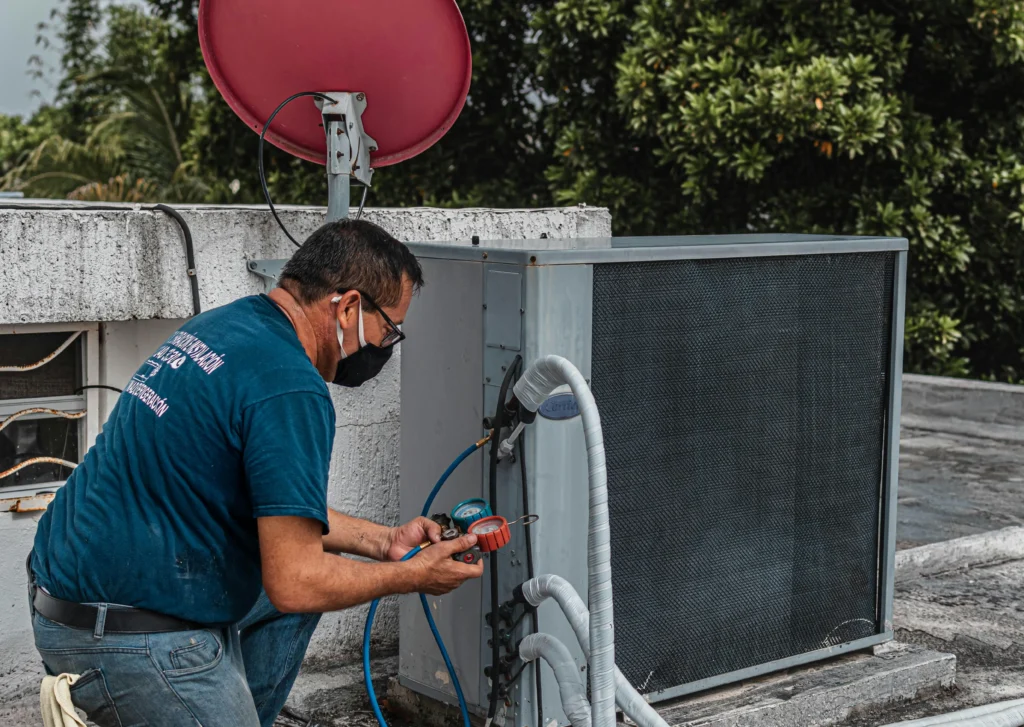
A heat pump that is low on charge has a leak, and adding refrigerant without finding it is a repeat visit. We measure superheat and subcooling, check the reversing valve and defrost cycle, and look for the leak before discussing a charge.
Hydronic faults are traced zone by zone
A cold room on a boiler system is usually a zone valve, a circulator or air in the loop, not a failed boiler. Tracing flow and temperature zone by zone is how you find it without replacing parts at random. Most cold rooms on a boiler are a flow problem, not a heat-source problem.
Controls and thermostats are part of the repair
A surprising share of no-heat calls end at a thermostat, a zone board or a transformer rather than at the equipment. We test the control circuit before condemning a furnace, a heat pump or a boiler. A thermostat that is miswired or set to the wrong mode presents exactly like a failed system until the call for heat is measured.
WHY ACT NOW
Why Heating Repair Can't Wait in Salt Lake City
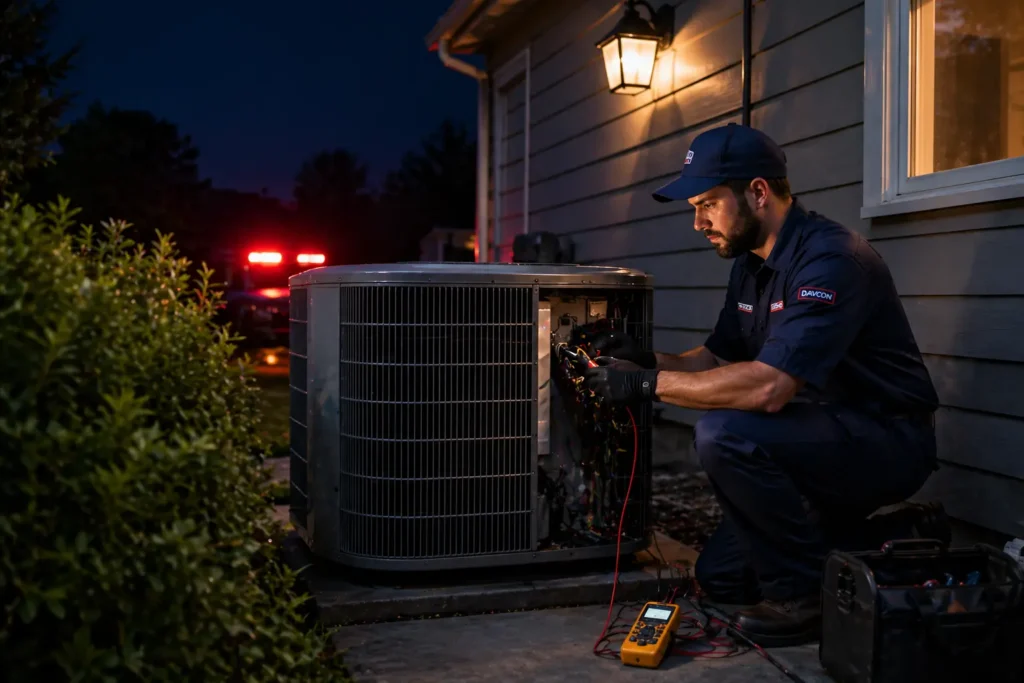
The January normal low at Salt Lake City International is 24.2 degrees Fahrenheit, the airport averages 51.9 inches of snow a season, and the valley logs 5,154 heating degree days a year against 1,420 cooling degree days (NOAA 1991-2020 normals). That ratio is the whole argument: this is a heating climate, and the system is asked to run for months rather than weeks.
A heat pump that is low on charge, a boiler with a failing circulator or an electric furnace with a bad sequencer will all keep working in mild weather and fail in the first cold snap. Waiting does not usually produce a bigger repair; it produces a colder house, a frozen condensate line or a burst pipe in a crawlspace.
The cost of delay also shows up in parts. A reversing valve, a zone valve actuator or a sequencer for an older system is not always on a shelf in the valley in January, and a house waiting on a part is a house without heat. That is the practical argument for calling when the system starts behaving differently rather than when it stops, and it is why the first cold snap produces a queue.
WHAT WE ACTUALLY CHECK
Proof: What Heating Repair Covers in a Salt Lake City Home
Heating systems fail along the path the heat takes: the source, the distribution and the control. A heat pump makes heat with a refrigerant cycle, a boiler makes it with water, an electric furnace makes it with resistance elements, and each path has its own failure points. The six blocks below are the ones we test most often in this valley, in rough order of how often they are the answer. Each one is measured rather than guessed at, and each one ends in a finding you can act on, whether that is a part, a distribution correction or a replacement conversation. The system type decides the order of the tests, so the first question on every heating call is what is actually making the heat.
Heat Pumps: Reversing Valves and Defrost
A heat pump heats by running its refrigerant cycle in reverse, and two components decide whether that works in winter: the reversing valve that switches the cycle and the defrost control that clears ice off the outdoor coil. A reversing valve stuck mid-travel gives you a system that heats poorly or not at all while the compressor runs normally. A defrost board that fails leaves the outdoor coil iced and the system starved of heat, which looks like a charge problem. We check the valve's solenoid and the coil temperature, force a defrost cycle and watch the board's behaviour. In this climate a heat pump that cannot complete defrost is a heat pump that quits on the nights it matters.
Boilers: Circulators, Zone Valves and Pressure
A boiler can fire perfectly and still heat nothing. The heat has to move, and it moves through circulators, zone valves and piping. A circulator that has lost its impeller, a zone valve actuator that no longer opens, a stuck check valve or air in a high point all produce the same complaint: one zone cold, others fine. We check supply and return temperature at the boiler, then at each zone, and listen to the pump. Pressure matters too: a system that has lost its fill pressure or has a failed expansion tank will short-cycle on limit or trip the relief valve. Hydronic faults are found by tracing flow, not by replacing the boiler. A pressure reading taken cold and again hot also tells you whether the expansion tank is doing its job or the relief valve is carrying the load.
Electric Furnaces and Sequencers
An electric furnace is simple in principle: elements, sequencers or relays, a blower and a limit. In practice the sequencer is the usual failure, because it switches elements in stages and the contacts pit over time. A furnace with one dead element heats weakly, a furnace with a stuck sequencer overheats and trips its limit, and a furnace with a failed blower relay runs the elements without air. We measure current at each element, check the sequencer timing and confirm the blower interlock. Electric heat is also where the service panel and the circuit matter, because a marginal breaker shows up as a furnace that quits under load. The blower compartment is worth a look too, because a dirty wheel raises the limit temperature and looks like a failed element until you measure it.
Ductless Mini-Splits and Inverter Boards
A ductless head is a small system with its own inverter board, fan and coil, and it fails differently from a central system. A head that runs but does not heat often has a dirty coil, a failed thermistor or a board that has lost a phase. Error codes on these units are specific, and reading them before touching anything saves the guesswork. We check the indoor and outdoor boards, the thermistors, the coil and the condensate path, and we confirm the line set and flare connections are sound. A mini-split that has been installed with a poor flare will lose charge slowly for years before anyone finds it. Condensate is the other quiet failure: a blocked drain on a ceiling head stains the ceiling before it ever stops the unit, and the repair is cheaper before the stain.
Thermostats, Zoning and Control Circuits
The control circuit is where a lot of heating calls actually end. A thermostat with a failed relay, a zone board with a blown transformer, a wiring splice that has loosened behind a wall or a float switch in a condensate pump can all stop a system that is mechanically healthy. We measure the call for heat at the equipment rather than at the thermostat, which tells you whether the problem is the control or the machine. Zoning adds another layer: a damper actuator that does not open leaves a room cold while the equipment runs normally, and the thermostat in that room will never be satisfied. A zone board that has lost a transformer usually takes a fuse with it, and replacing the fuse without finding the cause simply repeats the visit next week.
Hydronic Distribution: Baseboard, Radiant and Piping
On a boiler system, the emitters and the piping decide whether the heat arrives. Baseboard that is blocked by furniture, radiant tubing with a failed manifold actuator or a loop that has air-locked will leave a room cold while the boiler is fine. Older Salt Lake City homes often have a mix of cast-iron radiators and later baseboard, and the balance between them drifts over decades. We check flow at each emitter, look for sludge and air, and confirm the circulator is sized for the loop it serves. Distribution work is unglamorous, and it is often the difference between a boiler that runs constantly and one that runs properly. A magnetic separator or a proper flush is often the answer on an older loop, and it is cheaper than a new circulator every other winter.
The Scenario Nobody Covers: The House With Three Heating Systems
A lot of Salt Lake City houses have been added to rather than rebuilt: a 1963 bungalow with a later basement apartment, a sunroom with its own baseboard, a garage conversion with a mini-split. Three systems, three thermostats and no single place where the heat was designed. The thermostats do not talk to each other, and neither do the systems, so the house behaves like three houses stacked on one lot. Diagnosing it means treating each system as its own machine and then checking how they share the building. In practice the cold room is often served by two systems badly rather than one system well, and the answer is balance rather than capacity.
The addition that was never balanced
An addition with its own zone often steals flow from the original loop, so the original rooms run cold while the new space is comfortable. The fix is balancing and sometimes a dedicated circulator, not a bigger boiler.
The basement apartment with its own heat
A legal or informal apartment adds a second heating system and a second set of controls. When one fails, the other keeps the house warm enough to hide it until the tenant calls. We test both systems on the same visit.
The mini-split that was added to solve a cold room
A ductless head is often installed to fix one room, and it works until the outdoor unit ices or the board faults. Knowing that the head is the only heat for that room changes how urgently it gets repaired. A backup heat source that is the only heat for a room is not a comfort item, and it should be treated like the furnace.
What We Repair on Salt Lake City Heating Systems
Heat Pump Not Heating
Reversing valve, defrost, charge and compressor checks, with superheat and subcooling measured rather than a top-up and a hope.
Boiler and Radiant Faults
Circulators, zone valves, expansion tanks, air and sludge traced zone by zone until the cold room has an explanation.
Electric Furnace Failures
Element current, sequencer timing, blower interlock and the circuit, because electric heat fails at the panel as often as at the cabinet.
Ductless and Mini-Split Repair
Error codes read first, then boards, thermistors, coils, flares and condensate, with the line set checked for the slow leak.
Controls and Zoning
Thermostats, zone boards, transformers, dampers and wiring, tested at the equipment so the control circuit is not mistaken for a failed machine.
AREAS WE SERVE
Heating Repair Across Salt Lake City and the Wasatch Front
We repair heating systems from the Avenues and Sugar House out through West Valley City, Sandy and Layton. The system mix changes with the housing: older homes bring boilers and hydronic loops, newer ones bring heat pumps and zoned forced air.
What we bring
Refrigerant gauges and a leak detector, a multimeter and clamp meter, manometers, and the common controls for boilers, heat pumps and electric heat.
What we check first
The call for heat at the equipment, the error history, then the source, the distribution and the control in that order.
What you get in writing
The failed component, the measurement that proves it, what the repair involves, and what the rest of the system is doing.
When repair stops making sense
A heat pump with a failed compressor, or a boiler past its life with a leaking section, is a replacement conversation rather than another part.
If the house is cold and the system is running, call (385) 486-0176. HVAC Company Salt Lake City will identify the system, test it in order and tell you whether the fault is the equipment, the distribution or the control.
Salt Lake City
West Valley City
South Salt Lake
Murray
Millcreek
Holladay
Cottonwood Heights
Sandy
Midvale
West Jordan
South Jordan
Draper
Bountiful
Salt Lake City HVAC — Frequently Asked Questions
The heating questions we answer most often in Salt Lake City, across gas, electric, heat pump and hydronic systems.
A gas furnace runs fifteen to twenty years, a boiler twenty to thirty with proper water treatment, and a heat pump twelve to fifteen in a heating-heavy climate because the compressor works year round. A system past those ranges that needs a major component is usually at the point where replacement is the better answer.
Some frost is normal and the defrost cycle clears it. A unit that stays iced has a defrost problem, a failed sensor, a reversing valve that is not switching or low charge. It is not a weather problem, and running it iced damages the compressor.
Usually the heat is not moving: a circulator, a zone valve, air in the loop or a failed expansion tank. The boiler firing proves the burner works, not that the water is reaching the rooms, which is why the diagnosis traces flow zone by zone.
A blank thermostat is usually a control-circuit problem: a blown fuse at the equipment, a failed transformer, a broken wire or dead batteries. We test the call for heat at the equipment, which separates a thermostat fault from a machine fault in a few minutes.
A cold-climate heat pump can carry most of the season here, but it needs to be sized for the design temperature and it needs backup for the coldest stretches. The valley sees January nights in the low twenties as a normal, and colder nights regularly, so the backup and the defrost performance are the parts that decide whether the system is comfortable.
Two failures in a season on the same component, or a failure on a system past its expected life, is usually the signal to replace. A single failure on a system with life left is a repair. The decision should rest on age, the cost of the next failure and the condition of the distribution, not on the inconvenience of the moment.
Planning a new system instead? See heating installation & replacement in Salt Lake City.