
Heating and cooling for Woods Cross homes
Call Us
(385) 486-0176
3,591 homes
the smallest city on this list
82.5% gas heat
48.6% built after 1999
Homes in Woods Cross: altitude, age and fuel
Woods Cross is a 4,250-foot city where 18.7% of the housing predates 1970, 82.5% heats with utility gas and the median home was built in 1999. Those four numbers decide what a heating call here usually turns out to be.
What 4,250 feet does to a gas furnace in Woods Cross
Woods Cross sits at 4,250 feet above sea level, measured by the USGS Elevation Point Query Service at the city’s Census internal point. That is 2,250 feet above the 2,000-foot line where Goodman’s GMS8 installation instructions stop rating the furnace at nameplate input, and the manual derates 4 percent per 1,000 feet above sea level, about 17.0% here. Its orifice table steps from a #43 orifice at 0 to 2,000 feet to #44 at 3,000 and 4,000 feet and #45 at 5,000 feet, so a Woods Cross furnace must be orificed for its altitude. Woods Cross sits at 4,250 feet on the Davis County side of the valley, a small city between North Salt Lake and Bountiful with a housing stock that spans the post-war years and the 2000s.
When Woods Cross was built, and what that means for the furnace
The Census Bureau’s 2023 five-year estimate puts the median year built in Woods Cross at 1999, across 3,591 housing units. 18.7% of that stock predates 1970 and 48.6% was built after 1999, so the city’s furnaces do not share one age. Woods Cross’s median home was built in 1999, and 48.6% of the stock went up after 1999, so the city’s furnaces are a mix of original 2000s equipment and older units from the post-war streets. Age matters less for the walls than for what hangs on them: a furnace and a storage water heater are both wear items, and a house of 1999 has usually seen more than one of each. That is why the equipment date on the rating plate matters more than the date on the deed.
How Woods Cross heats: 82.5% utility gas
Of the 3,424 occupied units in Woods Cross, 2,847 (82.5%) heat with utility gas and 470 (13.6%) with electricity. Three caveats apply to that number: the Census counts a hybrid system once, the estimate lags roughly two years, and an electric-heated home is not automatically a heat-pump home. Woods Cross heats with utility gas at 82.5%, and the 13.6% electric share is higher than the older Davis County cities because more of its housing is recent. For a furnace call, the gas share is the load-bearing fact, because a gas furnace and an electric heat pump fail in different ways and are diagnosed in a different order. The minority electric share is not noise either: it is the group most likely to be sold the wrong replacement.
Who issues permits in Woods Cross
Woods Cross is in Davis County. Woods Cross issues building permits through the city, and a furnace or water-heater change is reviewed as mechanical work by the city’s building department. The city’s building department is the authority for a specific address: the requirement depends on the scope of work, the age of the venting and whether the gas line is being altered, so the address decides the paperwork rather than the brand of equipment. Which utility serves the address also decides rebate eligibility, and that is worth checking against the meter and the bill before assuming a programme applies. Keep the approved permit and the inspection sign-off with the equipment paperwork; both travel with the house when it is sold. If the work changes the venting, ask whether the city wants to inspect the flue as well as the appliance, because the two can be separate visits.
Services in Woods Cross
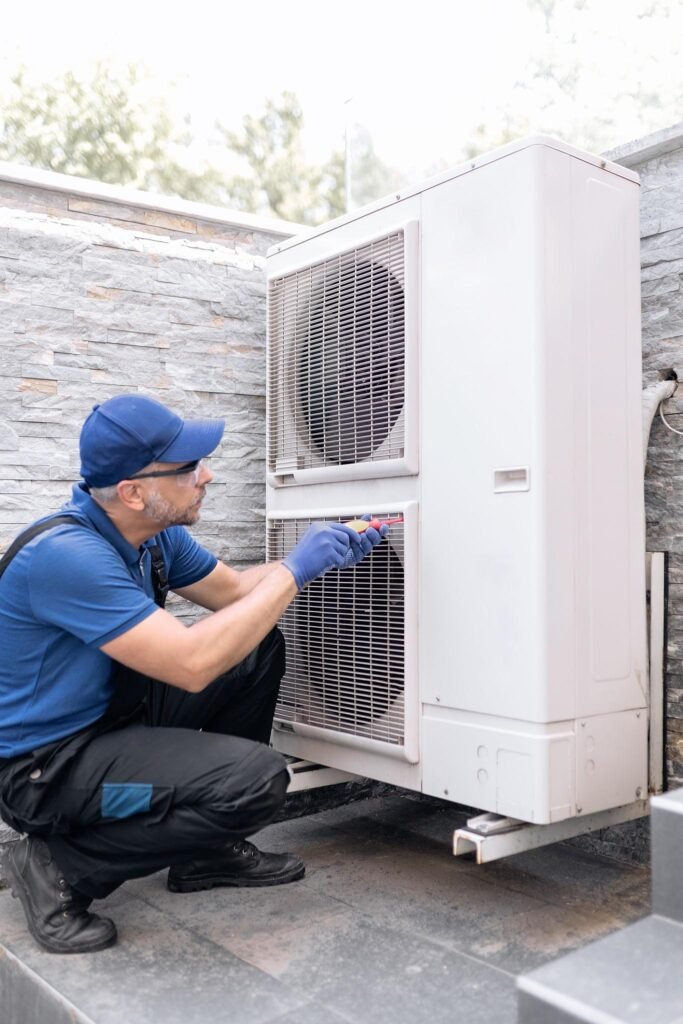
A heating call in Woods Cross usually resolves into one of four jobs: a repair on equipment that is still worth keeping, a replacement where the heat exchanger or the venting has run out, a maintenance visit that catches the problem before the cold snap, or a water heater problem in the same closet as the furnace. The links below go to the service page for each, because the detail belongs there rather than in a city page. The detail belongs on the service pages, and these links go straight to it.
For a furnace that is running but not keeping up, start with furnace repair, which covers the ignition, flame-sensor, pressure-switch and blower faults that account for most no-heat calls. If the unit is old enough that the repair is a down payment on a replacement, furnace installation and replacement covers sizing, venting and the altitude orifice a 4,250-foot house needs.
Water heaters in Woods Cross are usually gas storage tanks in the same utility closet, sharing the flue and the combustion air with the furnace. water heater repair, water heater installation and water heater maintenance cover the tank side of that closet, and furnace maintenance covers the annual visit that keeps a furnace out of the failure statistics.
Summer work is the other half of the same system: AC repair, AC installation and AC maintenance are the cooling equivalents, and a house that struggles in July usually has a duct or charge problem that shows up as a heating complaint in December. For a whole-system view rather than a single appliance, heating repair and heating maintenance cover the heating side end to end.
Why homeowners in Woods Cross choose us
Woods Cross is the smallest city on this page, and small cities are easier to know. The housing runs from post-war streets to 2000s subdivisions within a few blocks, and the equipment follows the same split. That means a Woods Cross call is usually decided quickly: older house, older flue, newer house, installation detail. We work out of Salt Lake City, which puts Woods Cross inside the same valley, the same gas network and the same altitude band as the city we are based in. That matters for a simple reason: the equipment conversation is the same one we have at home, and the parts, the venting practice and the altitude orifices are the ones we already keep on the van. What fails in this valley is already on the van, so the first visit is a diagnosis rather than a scouting trip.
Talk to a technician about a Woods Cross furnace
Why this winter matters in Woods Cross
Woods Cross is a heating city before it is a cooling city, and the reason is in the housing stock rather than the forecast. Woods Cross is small enough that its housing waves are visible: half the city went up after 1999, and that half is now entering its first replacement window.
The timing question in Woods Cross is therefore about the equipment, not the weather. A furnace that is 20 years old, in a house whose flue was built for a mid-efficiency unit, has two clocks running at once: the heat exchanger and the venting. Neither fails on a schedule, and both fail more expensively once the heating season is under way and every other house on the street is calling at the same time.
There is also the water heater in the same closet. It is the appliance homeowners forget until it leaks, and in Woods Cross it usually shares combustion air with the furnace, so a replacement that ignores it can leave the closet short of air. Looking at both at once is cheaper than looking at them a month apart.
What a Woods Cross furnace call looks like
- Listen to the complaint and the house: age, fuel, altitude and what the furnace is doing when it fails.
- Inspect the equipment, the venting and the combustion air before quoting any part.
- Test the ignition, flame sensor, pressure switch and blower against the manufacturer's sequence.
- Check the heat exchanger and the flue for the failure that makes a repair the wrong answer.
- Explain what was found, what it costs to keep the unit and what a replacement involves.
What we check before quoting a replacement in Woods Cross
- The altitude orifice and the manifold pressure against the rating plate, not against a sea-level default.
- The vent connector, the chimney liner and the combustion-air path in the closet.
- The gas line size and the shut-off, which are the two items most often left as found.
- The electrical circuit and the condensate path if the replacement is a condensing unit.
- The water heater sharing the closet, because it is the next thing to fail.
What a failing furnace looks like in Woods Cross
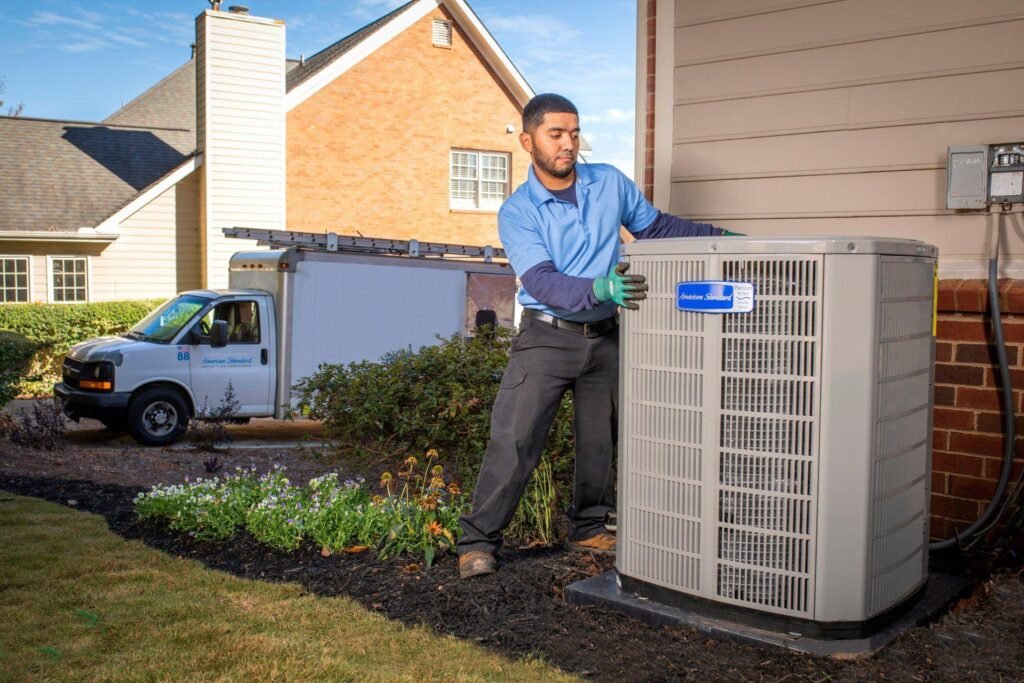
Most Woods Cross furnace failures announce themselves weeks before the no-heat call. The sequence is fairly consistent: the burner runs longer than it used to, the blower stays on after the heat stops, the house heats unevenly, and the first cold morning produces a unit that short-cycles or locks out.
At 4,250 feet the diagnosis has an extra step that a sea-level city does not need. A furnace that was orificed for a lower altitude runs rich, soots the exchanger and trips on flame rollout; one that was derated at the manifold runs lean and unstable. Both look like an ignition fault and neither is fixed by replacing the igniter.
Next step for Woods Cross homeowners
If the furnace in Woods Cross is short-cycling, sooting, or simply old enough that the repair is a guess, call (385) 486-0176 and describe what it is doing. The person who answers will ask for the address, the fuel and the age of the equipment, because those three answers decide whether the visit is a repair or a replacement conversation.
If the water heater in the same closet is the same age, mention it. Both appliances share more than a cupboard in Woods Cross.
Next step: call (385) 486-0176
Frequently asked questions in Woods Cross
Does altitude change how a gas furnace runs in Woods Cross?
Woods Cross’s 4,250 feet is above the 2,000-foot line where Goodman’s GMS8 instructions stop rating the furnace at nameplate input. The 4% per 1,000 feet derate is about 17% here, and the orifice has to match the installed altitude.
How old is the housing in Woods Cross, and does that matter for a furnace?
Woods Cross’s median year built is 1999, and 48.6% of its housing went up after 1999. That splits the city’s furnaces between original 2000s equipment and older units on the post-war streets.
Do I need a permit to replace a furnace or water heater in Woods Cross?
Woods Cross issues its own building permits, and a furnace or water-heater replacement is mechanical and plumbing work rather than a structural permit. The requirement depends on the scope: a like-for-like swap, a change of venting and a gas-line alteration are three different approvals. Confirm the current requirement with the city’s building department for the address before work is scheduled, and keep the inspection record with the equipment paperwork.
Is it worth replacing a 30-year-old furnace in Woods Cross?
In Woods Cross, where the median home dates from 1999, a 30-year-old furnace is usually a second-generation unit in a house whose original equipment is long gone. At that age the heat exchanger is the deciding part: a cracked or corroded exchanger ends the conversation, while a sound one with a failed inducer or control board is a repair. The answer follows the inspection, not the calendar.
Why does a Woods Cross furnace short-cycle on cold mornings?
Short cycling is the furnace reaching its limit and shutting off before the house is satisfied. The usual causes are a restricted filter or return, a blower that is slow, a flame sensor that drops out, or a pressure switch that cannot prove draft because the vent is partly blocked. In a Woods Cross house the return-air path is often the original one, which is why the filter and the return grille are checked before the electronics.
What should I check before calling about a Woods Cross furnace?
Check the filter, confirm the thermostat is calling for heat, and look at the furnace for a blinking fault code before calling. Note whether the water heater in the same closet is also misbehaving, because a shared flue or combustion-air problem shows up on both appliances. Those three details shorten the diagnosis in Woods Cross more than any other information a caller can bring.