
HVAC Company Salt Lake City — Heating, Cooling & Air Quality for the Wasatch Front
When a July afternoon in Salt Lake City pushes past 100°F and your air conditioner starts blowing warm, the problem isn’t just comfort — it’s a system fighting high-desert heat and thin mountain air at the same time. HVAC Company Salt Lake City fixes that. We repair, maintain, and install heating and cooling systems built for how this valley actually behaves: triple-digit dry summers, sub-20°F winter nights, and the winter inversions that trap our air. One call gets a straight answer and a written estimate — not a sales pitch.
Call (385) 486-0176 for service across Salt Lake City and the Wasatch Front.
Why Homeowners Choose HVAC Company Salt Lake City
Our AC Repair Services Salt Lake City team provides complete Cooling and Heating solutions for homeowners and businesses. Whether you need routine AC Maintenance, Emergency Service, or a New HVAC System, we deliver reliable HVAC Services designed for long-term performance and Energy Efficiency.
Most HVAC websites in this market read the same: "expert service, year-round comfort," copy that could belong to any city in America. We built this company around the opposite idea — that heating and cooling in Salt Lake City is genuinely different, and you deserve a contractor who understands why.
The Salt Lake Valley sits in a bowl at 4,226 feet between the Wasatch and Oquirrh ranges. That elevation changes how gas furnaces burn fuel and how AC compressors perform, which means equipment has to be sized for altitude — not pulled off a national spec sheet. In winter, cold air pools in that bowl and creates temperature inversions that give us some of the worst particulate air quality in the country. We treat those realities as the starting point of every job, not an afterthought.
You get honest diagnostics, a written estimate before work begins, and recommendations we can defend with a reason. We service all major brands, so our advice isn't steered by one manufacturer we're paid to push.
Why Acting Now Beats Waiting
When your HVAC Unit stops working properly, you need a Local AC Repair company with the experience to identify Common AC Issues quickly. Our HVAC Contractors provide dependable Heating and AC Repair solutions for homes and commercial properties throughout Salt Lake City.
July–September (AC Problems)
In Salt Lake City, HVAC problems don't wait for a convenient moment. AC failures cluster in the July–September stretch, exactly when monsoon humidity spikes and demand overwhelms every shop in the valley — a small refrigerant issue in June becomes a three-day wait in a 100°F house by August.
October-April (Heating Problems)
Heating is the same story in reverse. Furnaces run hard from October through April, roughly six months of continuous demand, and a system that limps into winter usually fails on the first sub-zero night when you need it most.
Inversion Season (Indoor Air Quality)
There's also a health clock. When an inversion settles over the valley for a week or two and PM2.5 readings climb, residents are told to stay indoors — which only helps if your indoor air is actually being filtered. Addressing filtration and airflow before inversion season, not during it, is the difference between a home that protects you and one that just traps the same bad air. Early service is cheaper, faster, and safer than emergency service every time.
What Stands Behind Our Work
We’ve served Salt Lake City and the surrounding Wasatch Front since 2009. In that time the priorities haven’t changed: do the diagnosis right, quote it in writing, and stand behind the work we perform.
- In business since 2009, working the full I-15 corridor from Ogden to Provo.
- Written estimates before any work starts — you approve the scope and the number first.
- We stand behind our work on the repairs and installations we perform.
- All major brands serviced — Trane, Carrier, Lennox, Goodman, Rheem, Daikin, Mitsubishi, Bryant, American Standard, York and more — so we fix what you own instead of selling you what we stock.
- Licensed and insured Utah HVAC contractor.
The Inversion Problem Most Salt Lake HVAC Companies Ignore
Here's the local reality almost no competitor's website will tell you. Every winter, cold air gets trapped under a warm layer in the Salt Lake Valley, sometimes for one to two weeks straight. During these inversions, the EPA has repeatedly ranked our air among the worst in the nation, and the valley carries a non-attainment designation for particulate pollution. Residents are advised to stay inside.
The catch: staying inside only protects you if your HVAC system is actually cleaning the air, not just recirculating it. A standard one-inch filter is designed to protect the furnace — not your lungs. It does very little against the fine PM2.5 particles that define a Salt Lake inversion.
That's why we treat indoor air quality here as a practical priority, not a bolt-on upsell. Depending on your home, that can mean upgrading to genuine media or HEPA-grade filtration, adding a whole-home air purifier, or installing an ERV/HRV system that brings in fresh air without dumping your heat. Wildfire smoke season in July and August makes the same equipment matter in summer. If you live in this valley, filtration is part of your heating and cooling system — we design it that way from the start.
A Note on Scope:
these improvements reduce airborne particulates and improve ventilation in your home. They are not medical devices — for health and medical advice, consult a physician.
Our Core Services in Salt Lake City
Air Conditioning Repair & Service
Air conditioning repair is the diagnosis and correction of a central AC or heat pump that has stopped cooling the way it should — weak airflow, warm supply air, short cycling, ice forming on the refrigerant lines, or a unit that simply won’t start. In a Salt Lake City summer, this matters more than the calendar suggests: our dry heat hides how hard the system is working, and afternoon monsoon humidity from July through September spikes the load right when the unit is already stressed. Catching a failing capacitor, a weak contactor, or low refrigerant early protects the compressor, the single most expensive component to replace. It also keeps you out of the August service backlog, when every shop in the valley is booked days deep. A working repair-or-replace decision starts with an honest diagnostic, so if your AC is struggling, call before it quits entirely in triple-digit heat.
Furnace & Heating Repair
Furnace service is the inspection, tuning, and repair of the gas or electric system that carries your home through a six-month Salt Lake heating season. It matters because January lows here average 20–25°F with sub-zero nights several times each winter, and at 4,226 feet, altitude changes how completely a gas furnace burns its fuel — an under-tuned unit wastes gas and can produce carbon monoxide, a genuine safety issue. Proper service supports a clear decision: keep and maintain a reliable furnace, or plan a replacement before it fails on the coldest night of the year rather than after. Salt Lake’s aggressive freeze-thaw cycles stress heat exchangers, igniters, and blower motors, so a fall check-up routinely pays for itself in avoided emergency calls. The immediate action is simple — schedule heating service before the first hard freeze, not once the furnace has already quit.
Indoor Air Quality & Inversion-Season Filtration
Indoor air quality equipment — media filters, HEPA-grade filtration, whole-home air purifiers, and ERV/HRV ventilators — controls what you actually breathe inside your home rather than just what temperature it is. In the Salt Lake Valley, where winter inversions and summer wildfire smoke regularly drive outdoor air into unhealthy or hazardous ranges, this is one of the highest-impact upgrades a homeowner here can make. It supports a concrete decision every inversion season: keep sealing the same recirculated air inside, or filter and ventilate it properly so “stay indoors” advice actually protects you. The right system is engineered to your specific ductwork and airflow, not sold as a one-size box off a shelf. These improvements reduce airborne particulates; they are not a substitute for medical care. The immediate action is to book an air quality assessment before the next inversion settles over the valley.
Heat Pump & Dual-Fuel Installation
A heat pump is a single system that both heats and cools using electricity, and modern cold-climate models have become genuinely viable on the Wasatch Front. But because our winters routinely drop below 20°F, the correct configuration here is usually dual-fuel — a heat pump paired with a gas furnace that automatically takes over on the coldest nights. That pairing captures efficient electric heating through most of the year while guaranteeing you’re never left cold when a front drops the temperature 30 to 40 degrees in a single afternoon through the canyon gaps. Beyond comfort, the decision has real money attached: qualifying dual-fuel and heat pump systems can earn federal 25C tax credits plus Rocky Mountain Power (wattsmart) and Dominion Energy Utah rebates. If you’re weighing a system replacement, ask us to model dual-fuel against straight gas for your specific home before you commit.
Preventive Maintenance & Tune-Ups
Preventive maintenance is scheduled seasonal service — cleaning, testing, and adjusting your AC and furnace before the season they’ll be worked hardest. It matters acutely in Salt Lake City because our climate swings violently: a front can drop temperatures 30–40°F in an afternoon, forcing a system to flip from cooling to heating, and units that aren’t maintained to handle those abrupt transitions fail more often here than in stable-climate markets. Maintenance supports the most valuable decision a homeowner can make — extending equipment life and catching small failures before they strand you in peak heat or deep cold. It also keeps manufacturer warranties valid, since most require documented annual service. The immediate action is to get on a spring-and-fall maintenance schedule so your system is ready before Salt Lake’s next temperature swing, not scrambling during it.
Areas We Serve Along the Wasatch Front
HVAC Company Salt Lake City covers roughly 80 miles of the I-15 corridor, from Ogden in the north to Provo and Orem in the south. Each sub-market has its own building stock and its own HVAC challenges, and we tailor the work accordingly.
Salt Lake City, West Valley City, South Salt Lake, Murray, Taylorsville, Millcreek, Holladay, Cottonwood Heights, and Midvale. This is a mix of older bungalows and mid-century homes — many still running aging furnaces, original ductwork, or evaporative swamp coolers that struggle during monsoon humidity and inversion days.
Sandy, West Jordan, South Jordan, Draper, Riverton, Herriman, Bluffdale, Lehi, American Fork, and Pleasant Grove. The Lehi–American Fork stretch is one of the fastest-growing regions in the country, full of newer homes where systems were often spec'd cheap during construction and are already due for upgrades or replacements.
Provo and Orem, where student housing, older homes, and new builds sit side by side.
Bountiful, North Salt Lake, Woods Cross, Centerville, Farmington, Kaysville, Layton, Clearfield, Roy, and Ogden. Higher-elevation and northern-valley homes see harder winters and heavier snow loads on outdoor equipment.
No matter where you sit on the corridor, you get the same climate-specific approach — equipment sized for altitude and built for how the Wasatch Front actually behaves.
Salt Lake City HVAC — Frequently Asked Questions
It's a quick guide for repair-versus-replace: multiply the repair cost by the unit's age in years, and if the result tops $5,000, replacement usually makes more sense. A $400 repair on a 13-year-old system ($5,200) leans toward replacing. We'll always give you the honest math for your specific unit rather than pushing a sale.
It varies widely — a minor AC or furnace repair often lands in the low hundreds, while a full system replacement runs into the thousands depending on size, efficiency, and whether ductwork needs work. Altitude here means equipment must be sized for 4,226 feet, so we quote every job in writing after seeing your home. No guessed numbers over the phone.
Usually not, if the repair is major. Units over 15 years old use older refrigerant, run far less efficiently, and tend to fail again soon after. In a Salt Lake summer that means another breakdown during peak heat. We'll tell you plainly whether a repair buys you real time or just delays the inevitable.
More than most places, yes. The valley's winter inversions and summer wildfire smoke create genuine air-quality events, and standard furnace filters do little against fine PM2.5 particles. Proper media, HEPA, or whole-home filtration turns "stay indoors" advice into actual protection. These are comfort and air-cleanliness improvements, not medical treatment — consult a physician for health concerns.
For most Salt Lake–area homes, a dual-fuel setup — heat pump plus gas backup — is the smart middle ground. You get efficient electric heating in mild weather and reliable gas heat on sub-20°F nights. We'll model both options against your home and any available rebates before you decide.
Yes. We cover the full Wasatch Front along the I-15 corridor — including West Valley City, Murray, Sandy, West Jordan, Draper, Lehi, American Fork, Provo, Orem, Bountiful, Layton, and Ogden — with the same climate-specific approach in every community.
Our Work


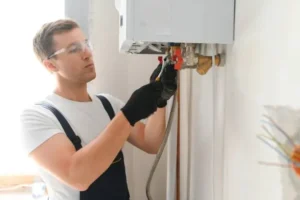
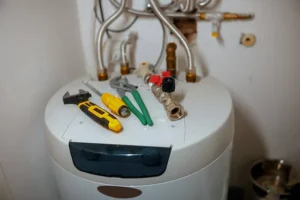
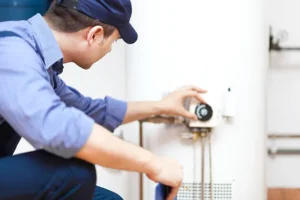
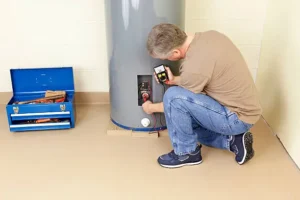

Looking for the best AC Service in town?
Get Straight Answers on Your Salt Lake City HVAC
Whether your AC quit in the July heat, your furnace is limping toward winter, or you want your home actually filtered before the next inversion, HVAC Company Salt Lake City is ready to help. Call and you’ll get a real diagnosis, a written estimate before any work begins, and a recommendation we can back with a reason — not a scripted upsell.
Call HVAC Company Salt Lake City now at (385) 486-0176 to schedule service anywhere on the Wasatch Front.