
Furnace Repair in Salt Lake City, UT
We repair gas furnaces by testing the sequence in order, from the call for heat to the blower, and replace the part that failed rather than the one that is easiest to reach.
A furnace gives you a symptom, not a diagnosis: a click with no flame, a blower that runs cold, or a heat cycle that stops after ninety seconds and starts again. In Salt Lake City the same three complaints come from a handful of parts, and the metro’s 5,154 heating degree days a year (NOAA) mean the furnace is the appliance that carries the house.
Why Choose Us for Furnace Repair in Salt Lake City
The ignition sequence is tested in order
A furnace proves itself step by step: call for heat, inducer, draft proven, ignition, flame proven, blower. Testing in that order tells you whether the fault is ignition, venting, flame sensing or airflow in minutes instead of swapping parts until the symptom changes.
Flame sensing is measured, not guessed
A flame sensor reading low microamps lights the burner and drops it seconds later, which looks exactly like a gas valve or a board failure. We measure the signal and clean or replace the sensor before anything expensive is considered.
Airflow is part of the diagnosis
A loaded filter, a blocked return or a failing blower trips the limit switch and shuts the burner down. Temperature rise and static pressure tell you whether the furnace is overheating because of a part or because it cannot move air.
The heat exchanger is inspected, not assumed
A cracked heat exchanger is a carbon monoxide problem, not a repair. It is checked where age and symptoms warrant it, and the finding is explained with the risk attached, in plain language, before you decide anything. Nobody is asked to take a cracked exchanger on trust either: you see the camera image.
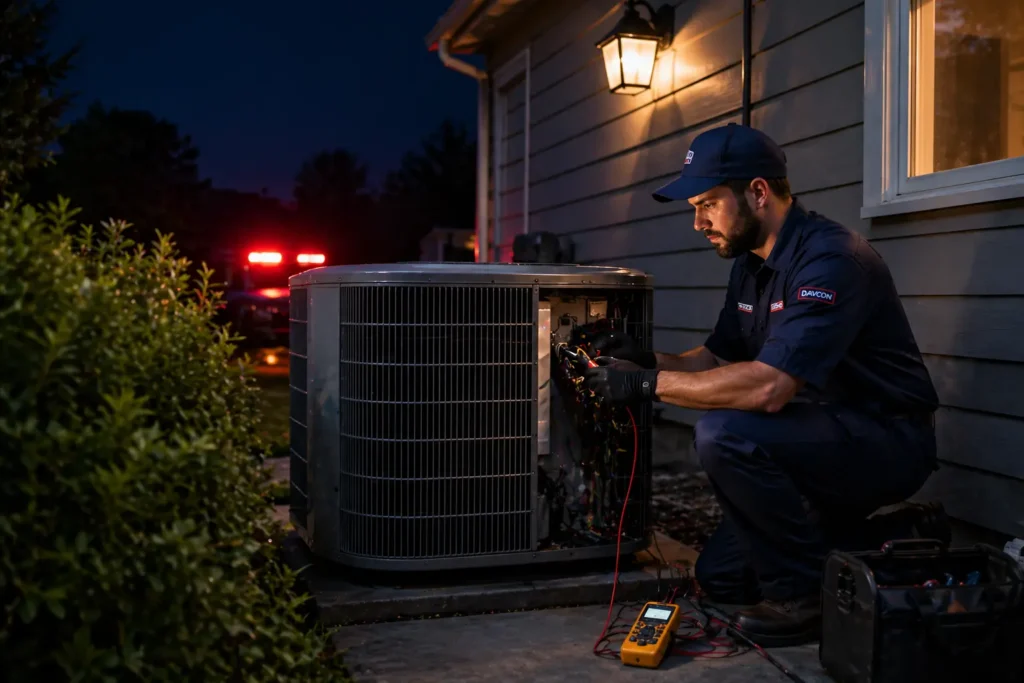
WHY ACT NOW
Why Furnace Repair Can't Wait in Salt Lake City
The January normal low at Salt Lake City International is 24.2 degrees Fahrenheit, and the airport averages 51.9 inches of snow a season (NOAA 1991-2020 normals). A furnace that runs continuously for days is a different machine from one that cycles on a mild afternoon: cold snaps expose weak igniters, tired inducer motors and pressure switches that were only just closing.
Waiting makes the repair worse in two ways. A furnace short-cycling on a dirty filter or a restricted return runs hot, and heat is what kills blower motors and warps limit switches. And a furnace that has been locked out for days in freezing weather puts the plumbing at risk, because a house that loses heat here can freeze pipes in a night.
There is a diagnostic cost too. A fault that is caught on the first symptom is usually one part. The same fault left to run produces secondary damage, and the second visit starts with two problems instead of one.
One more thing pushes the timing: parts availability. A blower motor or a control board for an older furnace is not always on a shelf in the valley in January, and a furnace that is down while a part ships is a house that is down with it.
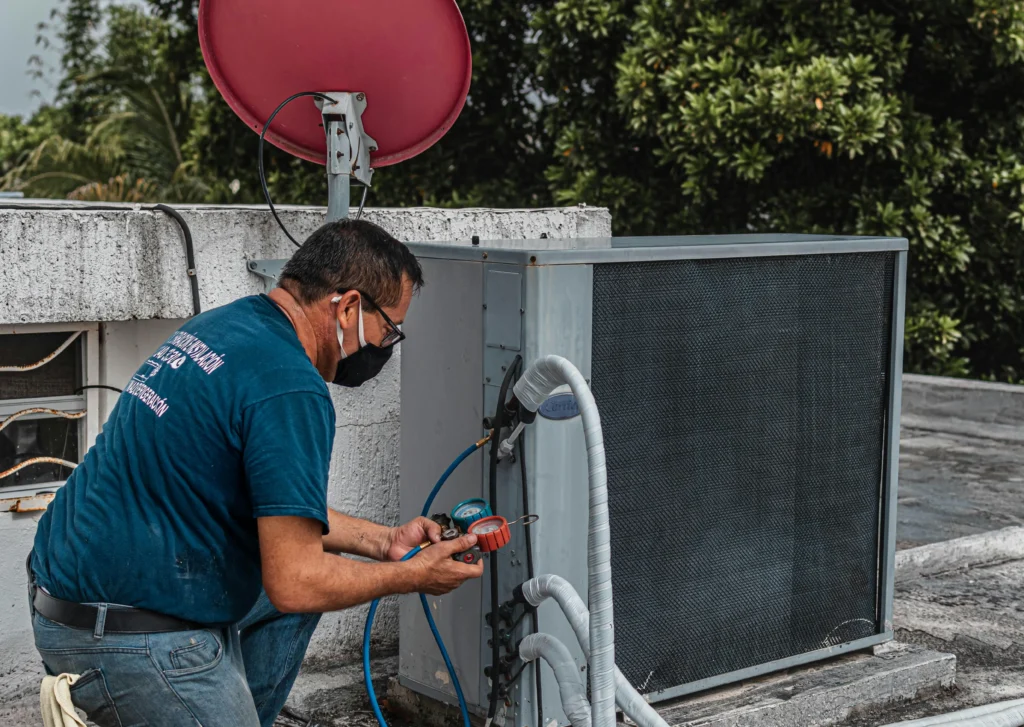
WHAT WE ACTUALLY CHECK
Proof: What Furnace Repair Covers in a Salt Lake City Home
A gas furnace is a sequence of proofs: it will not light until draft is proven, will not stay lit until flame is proven, and will not keep running if it overheats. Every repair below is a failure in one of those proofs, and each is tested rather than guessed at. Three quarters of Salt Lake City’s occupied homes heat with utility gas (ACS 2023, B25040), so the gas forced-air furnace is the system this page is written around. The six blocks that follow are the parts that actually fail here, in the order we test them, and the finding in each one decides whether the answer is a part, a safety repair or a replacement conversation.
Hot Surface Igniters and Flame Sensors
A modern gas furnace lights in a fixed order. The thermostat calls for heat, the inducer starts, a pressure switch proves draft, and only then does the ignition system energise: a silicon nitride or carbide igniter glows, the gas valve opens, and a flame sensor in the burner path proves the flame by passing a small current. An igniter that no longer glows, a sensor coated in oxide, or a gas valve that does not open all produce the same complaint, no heat, and each is a different repair. We test the igniter for resistance and the sensor for microamps, which separates them without replacing either. On a furnace past fifteen years the same test also tells you whether the cabinet is worth another part.
Pressure Switches, Inducers and Venting
The inducer pulls combustion gases through the heat exchanger and pushes them outside, and a pressure switch confirms that draft before ignition is allowed. If the vent is blocked, the termination is iced, the condensate trap is full, or the inducer is failing, the switch never closes and the furnace locks out without trying to light. On high-efficiency furnaces the same switch can open mid-cycle when water collects in a sagging vent pipe. The error code usually points at the switch, which is why switches get replaced when the real fault is the venting. We inspect the vent route, its slope and the termination before condemning the switch, because a switch that closes on a bench proves nothing about a blocked flue.
Limit Switches, Airflow and the Blower
A furnace is designed to move a specific amount of air across the heat exchanger, and when it cannot, the limit switch opens on temperature and shuts the burner down while the blower keeps running. The usual cause is a filter that has not been changed, a return blocked by furniture or a closed register, a dirty evaporator coil, or a blower wheel loaded with dust. Less often the motor itself is failing, or the speed tap is wrong after a board replacement. Measuring temperature rise across the furnace and static pressure in the ductwork answers the question a visual inspection cannot: is this a part, or is the system starving for air. That is why the filter and the ductwork are part of a furnace repair, not an upsell.
Gas Valves, Control Boards and Wiring
The gas valve is the last device in the ignition chain, and it only opens when the board tells it to and the safety proofs are satisfied. A valve that will not open with a proven signal, a board with a failed relay or a burnt trace, and a wiring harness with a loose spade connector all present as a furnace that clicks and does nothing. We check voltage at the valve, the board's error history and the harness before replacing either. Boards are the part most often changed on a guess, and a board that fails twice is usually telling you the real fault is a short, a weak transformer or a blower drawing too much current. Reading the board's fault history first is what keeps a control board from becoming a parts cannon.
Heat Exchangers and Carbon Monoxide
The heat exchanger is the boundary between combustion gas and the air you breathe, and a crack or a rusted-through section is a safety failure rather than a performance fault. Symptoms include a flame that lifts or rolls out, soot, a CO alarm, or a furnace that trips its limit repeatedly. Inspection means looking at the exchanger with a camera where the geometry allows it, checking the burners for discoloration, and testing combustion where the reading adds information. A cracked exchanger is not repairable in a residential furnace, and the honest answer is to stop using it until it is replaced. This is the one finding on the page that is never deferred to next season, and it is the finding that justifies the camera.
Condensate Traps and High-Efficiency Venting
A condensing furnace extracts heat by cooling flue gas until water condenses, which means it produces condensate on every run and depends on a trap and drain to get rid of it. A blocked trap, a frozen drain line or a sagging vent pipe full of water shuts the furnace down, often with a pressure-switch code that points at the wrong part. In a Utah winter the termination and the exterior drain are the usual casualties, and a furnace that fails only on the coldest nights is usually a condensate problem. The repair is unglamorous, a trap cleaned, a drain rerouted, a slope corrected, and it is the difference between a reliable furnace and a callback. It is also the first thing we look at when a furnace fails only in cold weather.
The Scenario Nobody Covers: The Furnace That Only Fails Below 20 Degrees
A furnace that works all winter except on the coldest nights is a specific Salt Lake City pattern, and it is rarely the part most homeowners suspect. The January normal low is 24.2 degrees (NOAA), and the nights that fall into the teens are when venting, condensate and gas pressure problems show themselves. It is also the pattern that produces the most expensive kind of misdiagnosis, because the furnace tests fine at two in the afternoon and fails at two in the morning.
The vent terminates where snow lands
A high-efficiency furnace vents through a sidewall, and the termination is often at a height the snowpack reaches. When the vent is buried or iced, the pressure switch never proves draft and the furnace locks out. The fix is a termination height or configuration change, not a switch.
The condensate line runs outside
A condensate drain that leaves the house through an exterior wall freezes on the first hard night. The trap fills, the pressure switch opens, and the furnace stops with a code that looks electrical. Rerouting the drain inside is the repair, and it is the reason some furnaces only fail in January.
Gas pressure drops when every house on the block is heating
A marginal gas supply shows up at peak demand, when the whole neighbourhood is firing at once. The furnace lights, the flame is weak, the sensor drops it out. Measuring inlet and manifold pressure on a cold evening is how that gets separated from an ignition fault.
What We Repair on Salt Lake City Furnaces
No Heat and No Response
No inducer sound and no click at the thermostat points to power, a board fuse, a door switch or the thermostat circuit before it points to gas. We confirm the call for heat first.
Clicking With No Flame
The igniter glows or the spark clicks and nothing lights: gas supply, a failed igniter, a dirty flame sensor or a pressure switch that never proved draft.
Lights and Drops Out
A cycle that starts normally and shuts down early is the signature of a low flame signal, a pressure switch opening, or a limit switch tripping on heat.
Short Cycling and Overheating
Restricted airflow, an oversized furnace or a thermostat in a bad location all produce short bursts. Temperature rise tells you which one you have.
Noise, Soot and CO Alarms
Rumbling, a screeching inducer, soot on the burners, a gas smell or a CO alarm are stop-and-call symptoms. They are not things to watch for another week.
AREAS WE SERVE
Furnace Repair Across Salt Lake City and the Wasatch Front
We repair furnaces from the Avenues and Sugar House out through West Valley City, Sandy and the south valley. Housing era shapes the call: pre-1970 homes bring venting and closet problems, newer homes bring condensing furnaces and condensate faults.
What we bring
Multimeters and manometers, a combustion analyser, a camera for heat exchanger inspection, and the common ignition and safety parts for gas furnaces.
What we check first
The call for heat, the error code history, the inducer and pressure switch, ignition and flame signal, then temperature rise and static pressure.
What you get in writing
The failed part, the measurement that proves it, what the repair involves, and what to watch on a furnace of that age.
When repair stops making sense
A cracked heat exchanger, or a furnace past fifteen to twenty years needing a blower and a board, is a replacement conversation rather than another part.
If the furnace is clicking, short cycling or blowing cold, call (385) 486-0176. HVAC Company Salt Lake City will test the sequence, tell you which proof failed and what the repair involves before anything is replaced.
Salt Lake City
West Valley City
South Salt Lake
Murray
Millcreek
Holladay
Cottonwood Heights
Sandy
Midvale
West Jordan
South Jordan
Draper
Bountiful
Salt Lake City HVAC — Frequently Asked Questions
The furnace questions that come up most often on Salt Lake City calls, answered the way we answer them at the door.
Ignition and flame proving, by a wide margin: a worn igniter, a dirty flame sensor, or a pressure switch that will not close because the vent or the condensate trap is restricted. Airflow faults, a loaded filter or a blocked return, are the second group, and they present as a furnace that runs but cannot keep up.
Filter changes and thermostat batteries, yes. Anything inside the cabinet is a gas appliance with a safety chain, and a mistake in the ignition or venting path can produce carbon monoxide rather than a fault code. The heat exchanger, gas valve and venting work belong to someone with a combustion analyser and the liability.
Usually a safety device doing its job: a limit switch opening on temperature because airflow is restricted, a pressure switch opening because draft is lost, or a flame sensor dropping out. Each one points at a different repair, which is why we measure temperature rise and draft rather than replacing the switch that reported it.
Fifteen to twenty years is the usual range for a gas forced-air furnace, with the low end common where the filter is neglected and the blower works against a restricted duct system. A furnace past fifteen years that needs a blower motor and a board is usually at the point where replacement is the better answer.
It means the barrier between combustion gas and your household air has failed, which is a carbon monoxide risk rather than a performance issue. Residential heat exchangers are not repaired in place. The furnace should be shut down until it is replaced, and CO alarms should be working in the meantime.
In the valley, replacing a furnace is permit work: the Greater Salt Lake Municipal Services District lists installing or replacing a furnace on its permit list, and Salt Lake City Building Services runs its own application process through the Citizen Access Portal, with mechanical permits separate from the building permit. Confirm the requirement for your address before work starts.