
Heating Maintenance in Salt Lake City, UT
Our visit is system-specific: measured readings, a condition report, and a clear answer on what needs attention before the heating season starts.
Heating maintenance in Salt Lake City has to cover four different machines: gas furnaces, heat pumps, boilers and ductless heads. They fail in different ways, and a checklist written for one tells you almost nothing about the others. The valley runs 5,154 heating degree days a year, so the equipment is worked hard enough that the differences matter.
Why Choose Us for Heating Maintenance in Salt Lake City
The visit matches the equipment
A heat pump needs coil, charge and defrost checks; a boiler needs burner, water and expansion checks; a ductless head needs a coil and drain cleaned. We test what the system actually has, rather than running a generic furnace form over all of them.
Readings, not reassurances
Superheat or subcooling, water temperature split, static pressure, combustion and temperature rise are measured and recorded. Numbers are what show a system drifting before it fails, and they give the next visit something to compare.
Distribution is part of the check
A heat pump or boiler that is healthy but starved by a duct or a hydronic loop is still a cold house. We check airflow and flow, not just the equipment, because the distribution is where a lot of winter complaints start.
Findings come with a repair-or-replace line
A maintenance visit should end with a clear statement about the system's condition and its remaining life. On equipment past its expected range, that answer matters more than the checklist. A system that is measured every year also has a history, and history is what makes a repair-or-replace call defensible rather than a matter of opinion.
WHY ACT NOW
Why Heating Maintenance Can't Wait in Salt Lake City
The January normal low is 24.2 degrees Fahrenheit, the airport averages 51.9 inches of snow a season, and the valley logs 5,154 heating degree days against 1,420 cooling degree days (NOAA 1991-2020 normals). In a climate shaped like that, a heating system runs for months without a break, and the parts that drift do so under load.
The failures that maintenance prevents are the gradual ones. A heat pump coil that is dirty loses capacity a little at a time until the backup heat carries the house. A boiler that has lost its expansion control trips its relief valve quietly for a season. A ductless head with a blocked drain stains a ceiling before it stops heating. None of those announce themselves; they arrive as a complaint.
There is a scheduling argument as well. The first cold week of the season is when every heating system in the valley wants attention, and a visit booked in early autumn happens on time while the one booked after a failure waits in a queue. In this valley that queue forms in the first week of real cold and does not clear until the weather breaks. A system checked before that week is a system with options.
THE SIX CHECKS
Proof: What Heating Maintenance Actually Checks
A heating maintenance visit is worth the time only if it changes what you know about the system. These six checks are the ones that produce a decision, and each is a measurement or an inspection with a finding attached. The first question is always what kind of heat the house has, because the checks that follow depend on it: a heat pump is judged on refrigerant and airflow, a boiler on water and combustion, a ductless head on coil condition and drain. What they share is the discipline of measuring before advising. Everything found is written down, anything that needs a part is quoted separately, and the thermostat is left configured for the season rather than the last one.
Heat Pump Coil, Filter and Defrost
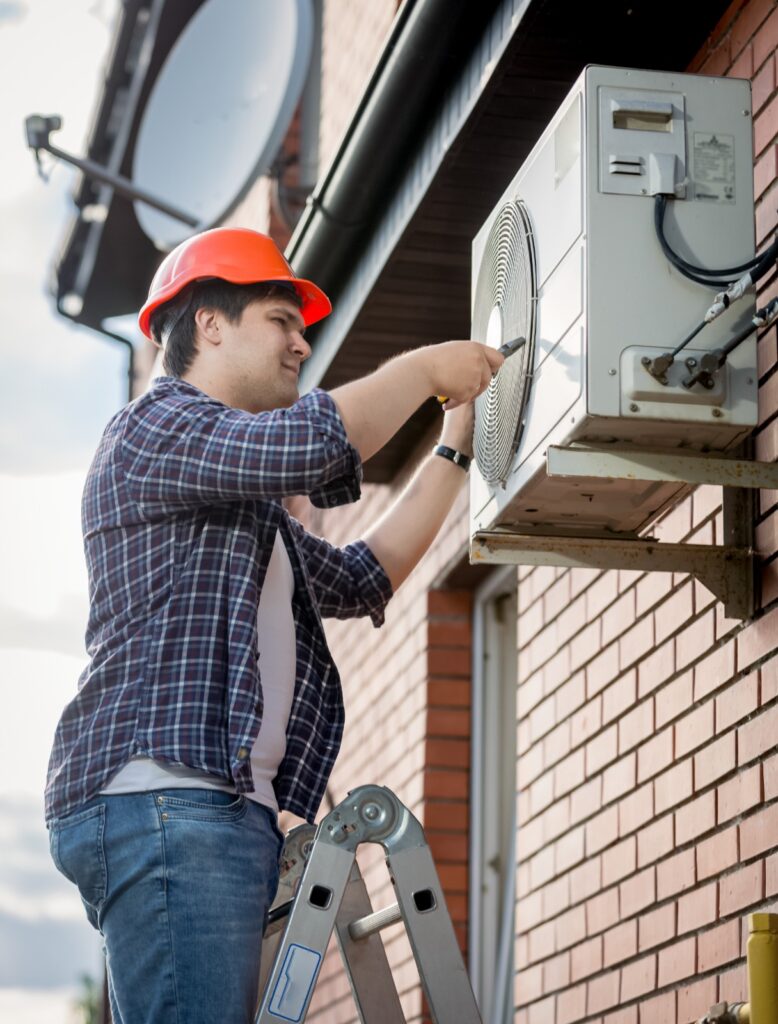
A heat pump works all year, which means its coils and filters collect a year of dust before the heating season even starts. A dirty outdoor coil reduces capacity exactly when capacity is scarce, and a dirty indoor coil restricts airflow until the system runs continuously and leans on backup heat. Defrost is the other half: the board has to sense frost, reverse the cycle, and return to heating without leaving ice behind. We clean both coils, check the filter and the blower, force a defrost cycle and watch the board and the sensors behave. A heat pump that defrosts properly in October is a heat pump that will still be heating in January. The filter and the outdoor clearance are the two things a homeowner can keep an eye on between visits.
Boiler Service: Burner, Water and Expansion
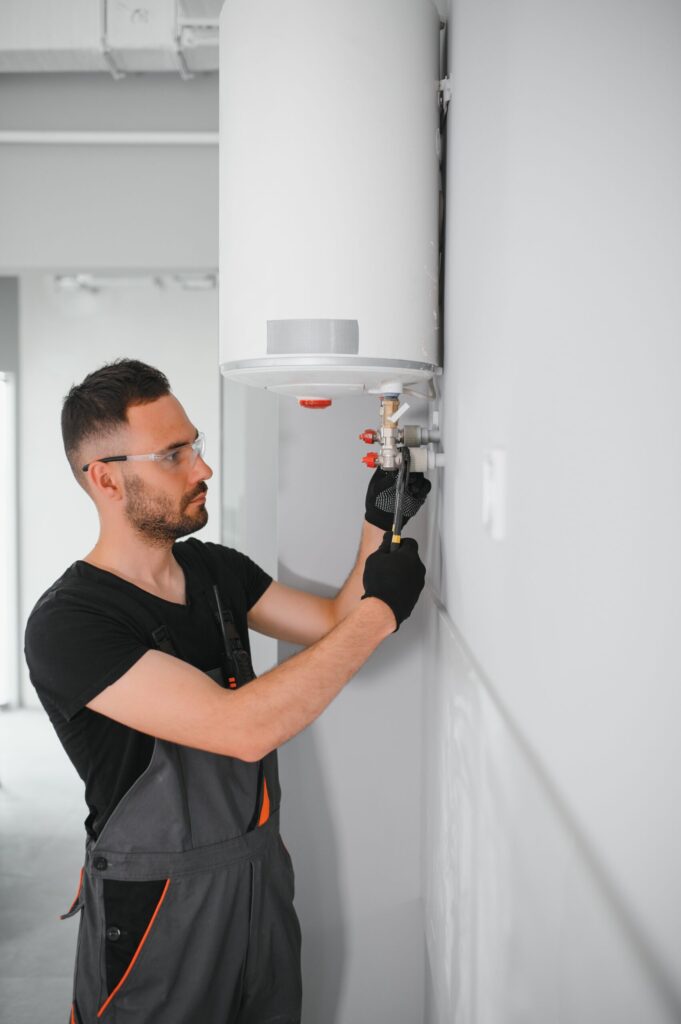
A boiler is a pressure vessel with a flame, and both halves need attention. On the combustion side the burner is cleaned, the flame observed and combustion analysed, because a dirty burner wastes fuel and a drifting air-fuel ratio produces carbon monoxide. On the water side the expansion tank is checked for charge, the relief valve is tested, the air eliminator is confirmed working and the system pressure is set cold. Water treatment matters too: a loop that has never been treated accumulates sludge and scale, which insulates the boiler and blocks the emitters. Sludge is the reason a boiler that fires perfectly can still leave a house cold. Expansion control is the part that fails quietly and takes the relief valve with it.
Ductless Head Cleaning and Charge Verification
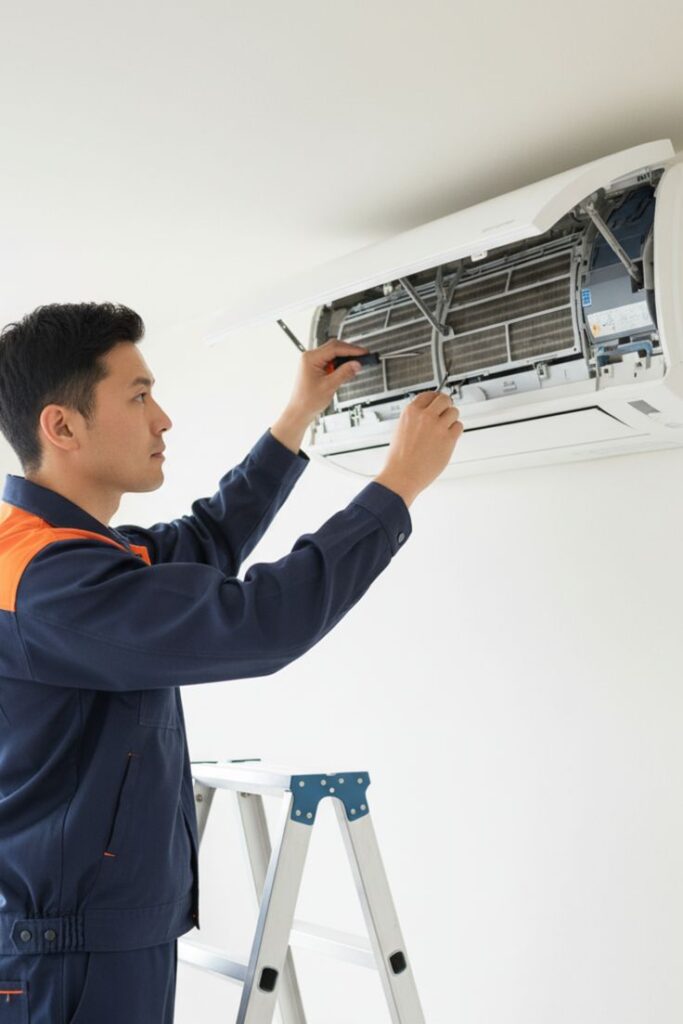
A ductless head is small, and small systems are less forgiving. The indoor coil, the fan wheel and the drain pan collect dust and biological growth, and a blocked drain will find the ceiling. We clean the coil and the wheel, flush the drain, check the condensate pump if there is one, and verify the charge by subcooling or superheat rather than by feel. Flare connections are inspected because a poor flare loses charge slowly for years, and a head that has been topped up without finding the leak is a head that will be low again next season. Filters and remote settings are checked last, because a head set to the wrong mode looks like a failure. A clean drain is the difference between a service call and a ceiling repair.
Hydronic Valves, Pumps and Zone Controls
On a hydronic system the water has to move, and the moving parts are where maintenance pays. Circulators wear, zone valve actuators stick, check valves fail open, and air collects at high points until a loop stops heating. We exercise the zone valves, check pump operation and current draw, confirm the flow at each zone by temperature split, and look for the sludge that eventually blocks a loop. Air elimination is checked because a system that keeps needing to be bled is telling you something. On an older loop, a magnetic separator or a flush does more for reliability than any single part. Exercising the valves also keeps them from seizing over the summer, which is the failure that shows up as a cold room on the first cold morning.
Controls, Setbacks and System Balance
Controls are the part of a heating system that homeowners interact with and the part that is most often misconfigured. A heat pump on a deep setback recovers slowly and triggers backup heat; a boiler on a schedule that matches an office rather than a house runs when nobody is home; a zoning system with a failed damper heats one room and starves another. We check the schedule, the setpoints, the switchover temperature on dual-fuel systems, and the balance between zones. Balance is measured with temperature at the emitters, not guessed from the thermostat reading in the hallway. A schedule that suits an office rather than a household is the most common finding, and it is free to correct. Setbacks on a heat pump need to be shallow for the same reason.
Combustion Safety and Carbon Monoxide
For any fuel-burning heating system, the safety checks come first. Combustion is analysed, the flue is inspected for corrosion and proper draft, spillage at the draft hood is tested, and the heat exchanger is inspected where the geometry allows. At 4,579 feet (USGS) the air is thinner, so a venting arrangement that is marginal at sea level can be a problem here. Carbon monoxide alarms are checked and their age noted, because the sensor in an old alarm is not the sensor it was. Finding a venting problem on a scheduled visit is the whole point of scheduling the visit. It is also why the safety checks come before the efficiency conversation. An alarm past its service life is not a safety device.
THE LOCAL SCENARIO
The Scenario Nobody Covers: The System That Is Fine Until It Is Not
The hardest heating maintenance calls in this valley are the ones where nothing is obviously broken. The system heats, the thermostat reads what it should, and the homeowner’s only complaint is that the house feels different from last winter. That is usually a distribution or control problem rather than an equipment failure.
The most common version is a heat pump that has lost capacity gradually. The coil is dirty, the charge has drifted through a slow flare leak, and the backup heat has been carrying more of the load each year without anyone noticing, because the house still gets warm. The electricity bill is the only symptom, and it arrives after the fact. The second version is a hydronic system where a zone valve has been stuck part-open for two seasons, so one part of the house runs cool while the boiler works harder.
Neither shows up in a furnace checklist, and neither is fixed by replacing equipment. They are found by measuring: capacity against the design, temperature split at the emitters, charge against the manufacturer’s specification. That is why the maintenance visit starts with the system type and the readings rather than with a form. A house that feels different from last winter is giving you a measurement problem, not a failure, and the answer is usually in the air or the water rather than in the equipment. That is why the visit includes the rooms, the registers and the loop, not only the machine room.
What Our Heating Maintenance Includes
Heat Pump Service
Coils cleaned, filters and blower checked, defrost forced and observed, and charge verified by subcooling or superheat.
Boiler Service
Burner cleaned, combustion analysed, expansion tank charged, relief valve tested and the loop checked for sludge and air.
Ductless Head Service
Coil and fan wheel cleaned, drain flushed, flares inspected and the charge verified rather than topped up.
Hydronic and Zone Checks
Circulators, zone valves, check valves and air elimination exercised and tested, with flow confirmed at each zone.
Controls and Combustion Safety
Schedules and switchover temperatures checked, zones balanced, and combustion, draft and CO alarms verified on fuel-burning systems.
AREAS WE SERVE
Heating Maintenance Across Salt Lake City
We service heating systems along the Wasatch Front, from the Avenues and Sugar House to Sandy, West Jordan and Layton. Older homes bring boilers and hydronic loops; newer ones bring heat pumps and zoned forced air.
Before the season
Book in early autumn, while a finding can still be acted on before the first cold week. A system checked in October has options.
What we measure
Capacity or temperature rise, static pressure or water split, refrigerant charge, combustion and draft, all recorded.
What you receive
A written report: equipment condition, distribution findings, control settings, safety results and the readings.
What happens next
Parts and repairs are quoted separately. On equipment past its expected life, the report says plainly whether another season is a reasonable bet.
Book the heating visit before the season: call (385) 486-0176. HVAC Company Salt Lake City will measure the system, check the distribution and tell you what the readings mean for the winter ahead.
Salt Lake City
South Salt Lake
Millcreek
Holladay
Murray
Taylorsville
Cottonwood Heights
Sandy
Midvale
West Jordan
South Jordan
Draper
Bountiful
Salt Lake City HVAC — Frequently Asked Questions
The heating maintenance questions we answer most often in Salt Lake City, across heat pump, boiler, furnace and ductless systems.
It depends on the system. A heat pump gets coils cleaned, filters and blower checked, defrost tested and charge verified. A boiler gets the burner cleaned, combustion analysed, expansion and relief checked and the loop inspected. All of them get controls, distribution and safety checks, and all of them end with measured readings.
Once a year, before the heating season. A heat pump benefits from a second look in spring because it runs all summer, and a boiler with untreated water benefits from an annual water-side check. The annual visit is the minimum that keeps readings comparable.
It helps most in winter, because that is when capacity matters. A clean coil, a correct charge and a working defrost cycle are the difference between a heat pump that carries the house and one that leans on backup heat through the coldest weeks.
Annually for the combustion side, and annually for the water side if the system has never been treated. A boiler that is serviced yearly and kept at correct pressure lasts considerably longer than one that is only looked at when a zone goes cold.
The usual causes are a dirty coil, low charge from a slow leak, a defrost problem or a reversing valve that is not switching fully. All four reduce capacity without stopping the system, which is why the house gets gradually cooler instead of failing outright.
Before. A visit in early autumn has time to act on a finding, and it puts the system into the cold season with clean coils, correct charge and a tested defrost cycle. A spring visit is useful for a heat pump, but it arrives after the season that tested everything.
When maintenance is no longer enough, see heating installation & replacement in Salt Lake City.